Shockwave Therapy for Heel Pain in Belgrade
Radial shockwave (ESWT) for plantar fasciitis, heel spur, Achilles and other chronic tendon problems — combined with a loading programme, not used as a stand-alone quick fix.
- Block 64, New Belgrade
- Mon–Fri 08–20, Sat 09–15
- +381 60 503 74 77
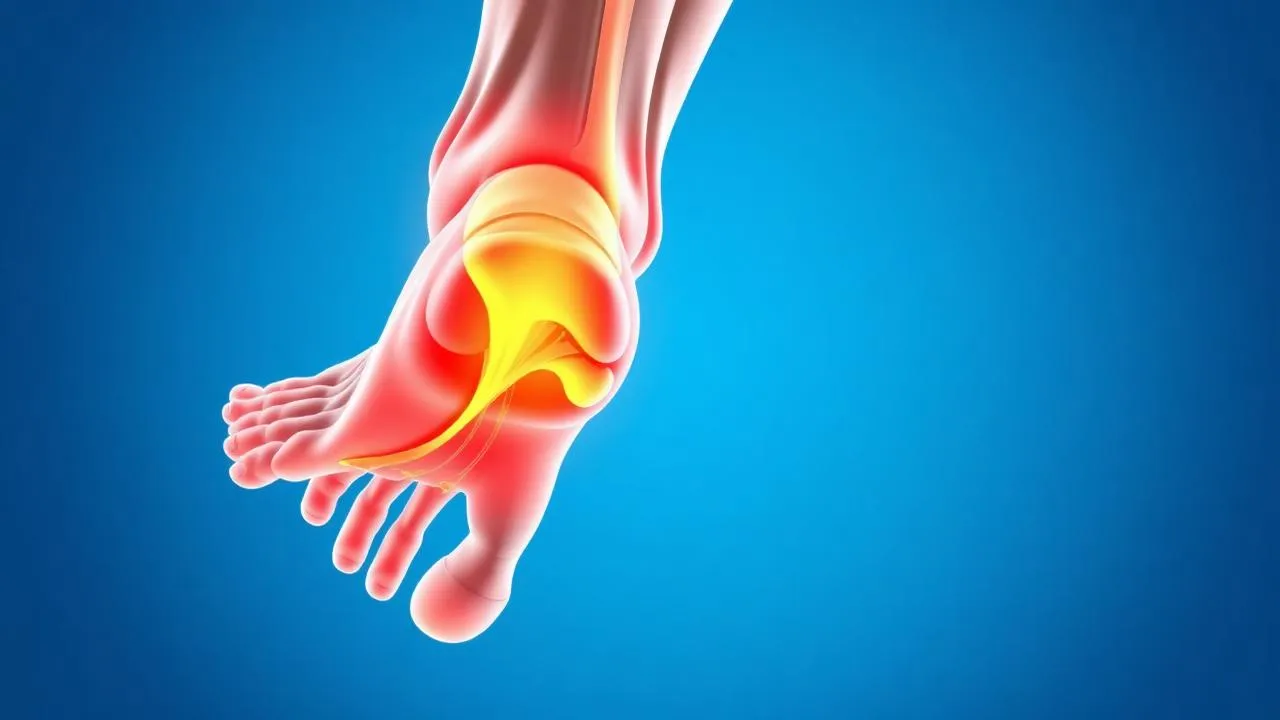
Shockwave therapy (radial ESWT) at PHYSIOWRLD
Heel pain that is worst with the first steps in the morning and after sitting is most often plantar fasciitis — a degenerative overload of the fascia where it attaches to the heel bone. A “heel spur” seen on X-ray is a consequence of that long-standing traction, not usually the cause of the pain itself, which is why removing the spur is rarely necessary.
Radial extracorporeal shockwave therapy (r-ESWT) delivers acoustic pressure waves to the painful attachment, stimulating a healing response in chronic, poorly healing tendon and fascia tissue. It is one of the best-supported non-surgical treatments for plantar fasciitis lasting more than three months, and is also used for Achilles tendinopathy, patellar tendinopathy, tennis elbow and calcific shoulder tendinitis.
At PHYSIOWRLD, shockwave is delivered by a physiotherapist as part of a plan that includes calf and plantar fascia loading, footwear advice and, where needed, laser therapy. We use radial (not focused) shockwave, which is appropriate for these superficial, soft-tissue conditions.
Who this service is for
- Plantar fasciitis / heel spur lasting more than 6–12 weeks
- Achilles tendinopathy (mid-portion and insertional)
- Patellar tendinopathy (jumper’s knee)
- Lateral and medial epicondylitis (tennis and golfer’s elbow)
- Calcific tendinitis of the shoulder
- Greater trochanteric pain syndrome (lateral hip pain)
- Chronic muscle trigger points that have not responded to manual therapy
What happens at your first visit
- 1
History: how long the pain has lasted, morning pain pattern, footwear, running or standing load, previous treatments and any injections.
- 2
Examination: palpation of the plantar fascia insertion and Achilles, calf flexibility, ankle mobility, foot posture and — when indicated — a check for other causes of heel pain such as nerve entrapment or stress fracture.
- 3
If shockwave is appropriate, the first session is usually delivered the same day, together with your loading programme. If the picture does not fit, we arrange imaging (ultrasound or X-ray) through our partner clinic before treating.
What treatment looks like
- The painful area is located by palpation and marked. Coupling gel is applied and the applicator delivers roughly 2,000–2,500 pulses over 5–8 minutes at a pressure adjusted to your tolerance.
- The treatment is uncomfortable but tolerable; intensity is increased gradually. No anaesthetic is used because it reduces the effect.
- Afterwards you can walk normally. Mild soreness or redness for 24–48 hours is expected. You avoid anti-inflammatory medication and ice for the following days because the treatment works by stimulating a controlled inflammatory healing response.
- Each visit also includes progression of your calf and plantar fascia loading exercises — the combination is what produces lasting results.
Duration, number of sessions and prices
A shockwave session lasts 15–20 minutes. The standard protocol is 3–5 sessions, one per week. Improvement is usually noticeable after the second or third session, with the full effect developing over 6–12 weeks as the tissue remodels. Sessions cost 3,000 RSD each or 13,500 RSD for a package of five — a complete course therefore costs 9,000–13,500 RSD.
| Service | Duration | Price |
|---|---|---|
| Shockwave therapy (radial ESWT)5 sessions – 13,500 RSD | 15–20 min | 3,000 RSD |
| Physical therapy (assessment + device therapy + manual techniques)10 sessions – 20,000 RSD | 30 min | 2,500 RSD |
| High-intensity laser therapy (HILT)10 sessions – 20,000 RSD | 15–20 min | 2,500 RSD |
| Kinesitherapy (one-on-one guided exercise)10 sessions – 30,000 RSD | 30 min | 3,500 RSD |
Prices are in Serbian dinars (RSD), identical for all patients. See the full price list in English.
Conditions we treat
- Plantar fasciitis and heel spur
- Achilles tendinopathy
- Patellar tendinopathy
- Tennis elbow and golfer’s elbow
- Calcific shoulder tendinitis
- Greater trochanteric pain syndrome
- Shin splints (medial tibial stress syndrome)
- Chronic myofascial trigger points
Contraindications — when you need a doctor first
Physiotherapy is safe for most people, but some situations require a medical assessment before or instead of treatment. Contact a doctor or emergency service if any of the following apply:
- Pregnancy
- Anticoagulant therapy or bleeding disorders
- Local infection, open wound or tumour in the treatment area
- Cortisone injection into the same area within the previous 6 weeks
- Acute tendon rupture or stress fracture — needs orthopaedic care, not shockwave
- Treatment directly over the lungs, major nerves or blood vessels, or over growth plates in children
- Pacemaker or other implanted electronic device (individual assessment)
Orthopaedic shockwave vs. aesthetic AWT — not the same treatment
The same physical principle — acoustic pressure waves — is used in two very different services at our clinic, and they should not be confused. Orthopaedic shockwave (this page) treats painful tendons and fascia; the parameters, applicators and protocol are set for tissue healing and pain. Acoustic wave therapy (AWT) for cellulite and body contouring is an aesthetic treatment with different settings and goals, listed separately under body-care services at 3,500 RSD per region.
If you are looking for treatment of heel, Achilles, elbow or shoulder pain, you are on the right page. For cellulite treatment, see the anti-cellulite page.
What the evidence says about shockwave for plantar fasciitis
Systematic reviews and clinical guidelines support ESWT for chronic plantar fasciitis that has not improved with at least 3 months of conservative care, with success rates commonly reported in the range of 60–80% for meaningful pain reduction. Results are better when shockwave is combined with plantar fascia and calf stretching or loading, and when footwear and training load are addressed. It is not effective in every patient, and we say so — if there is no change after 3 sessions, we reassess rather than continuing.
Shockwave compared with other heel-pain treatments
| Treatment | Typical role | Considerations |
|---|---|---|
| Loading exercises + footwear | First-line for every patient | Slow (8–12 weeks) but essential; shockwave does not replace it |
| Radial shockwave (ESWT) | Chronic cases > 6–12 weeks | 3–5 sessions, no downtime, no medication; full effect over 6–12 weeks |
| High-intensity laser | Pain relief, acute-on-chronic flares | Often combined with shockwave; 2,500 RSD per session |
| Cortisone injection | Short-term pain relief | Risk of fascia rupture and fat-pad atrophy with repeat injections; not compatible with shockwave for 6 weeks |
| Surgery | Rare, resistant cases after 12+ months | Last resort; long recovery |
Shockwave for Achilles tendinopathy
Mid-portion Achilles tendinopathy responds well to a combination of heavy slow calf loading and shockwave; insertional Achilles problems (pain at the heel bone) need a modified exercise approach that avoids deep dorsiflexion. In both cases, the shockwave protocol is 3–5 weekly sessions. We do not treat a suspected partial or complete Achilles rupture with shockwave — that requires ultrasound assessment and orthopaedic care first.
Your team
Licensed physiotherapist
Leads assessments, kinesitherapy and post-operative rehabilitation. Consultations in English.
Ackerman chiropractor
Manual therapy and spinal adjustments after a structured clinical screening.
Location, parking and opening hours
PHYSIOWRLD — Block 64, New Belgrade
Omladinskih brigada 96E/4, 11070 Novi Beograd, SerbiaGet directionsParking: Free street parking directly in front of the building; a public garage is a 2-minute walk away.
Opening hours
- Monday – Friday: 08:00–20:00
- Saturday: 09:00–15:00
- Sunday – closed
Frequently asked questions
- How much does shockwave therapy cost in Belgrade?
- At PHYSIOWRLD a shockwave session is 3,000 RSD; a package of five is 13,500 RSD. A complete course for heel pain (3–5 sessions) therefore costs 9,000–13,500 RSD.
- How many shockwave sessions are needed for a heel spur or plantar fasciitis?
- Usually 3–5 sessions, one per week. Most patients notice improvement after the second or third session; the full effect develops over the following 6–12 weeks.
- Does shockwave therapy hurt?
- It is uncomfortable rather than painful — a strong tapping sensation that is increased gradually to your tolerance. Sessions last 15–20 minutes, and you walk out normally.
- Does shockwave remove the heel spur?
- No, and it does not need to. The spur is a marker of long-standing traction, not usually the pain source. Shockwave treats the painful fascia attachment; pain typically resolves while the spur remains on X-ray.
- Can I run or train during shockwave treatment?
- Light activity is fine; we usually advise reducing the specific aggravating load (long runs, prolonged standing) during the course and rebuilding it gradually as symptoms settle.
- Is your shockwave focused or radial?
- Radial (r-ESWT). It is well suited to superficial conditions such as plantar fasciitis, Achilles and elbow tendinopathy. We do not offer focused shockwave.
- I had a cortisone injection recently. Can I have shockwave?
- Not within 6 weeks of the injection, because the combination increases the risk of tissue damage. We schedule accordingly.
- Is this the same as the AWT cellulite treatment?
- No. Orthopaedic shockwave treats painful tendons and fascia. AWT for cellulite is an aesthetic treatment with different parameters, offered separately under body-care services.
Book an appointment in English
Send a short WhatsApp message describing the problem and your preferred times, or use the booking form. We usually reply within a few hours during opening hours.